

Pet Immunity Testing for PIR Detectors
Most PIR detector datasheets carry a pet-immunity figure — 20 kg, 55 lb, 85 lb, or a height limit such as 80 cm. Very few of those numbers are backed by a measurement, and not because anyone is being careless. A live animal will not walk a defined path at a defined speed, so the measurement has not been practical to make.
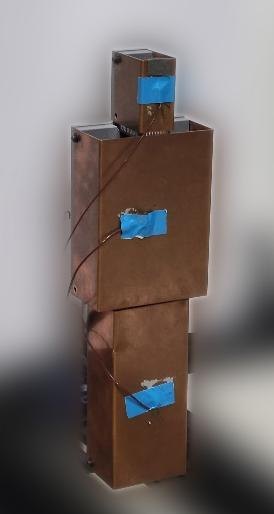
We built the target instead. Temperature-controlled animal dummies on the same 5-axis CNC stage we use for IEC 63180 testing, positioned to 0.1 mm, with 98.5% demonstrated repeatability. The result is a number you can actually publish.
Summary
- What it is: SPT-F, a measurement of how a PIR detector responds to an animal-sized thermal target compared with a human-sized one, at the same positions.
- What you get: the discrimination margin — the ratio between the human signal and the animal signal at the same position.
- Applies to: indoor and outdoor detectors alike, because pet-immunity specifications are written in mass and height, not species.
- Test targets: human dummy at 1:5 scale plus animal dummies, all with numerically controlled section temperatures.
- Turnaround: typically 2 to 4 weeks. List price: USD 5,000.
- Status: engineering measurement against defined thermal targets. Not a certification, and not a substitute for any scheme that requires live animals.
- Who it is for: any manufacturer publishing a pet-immunity claim — we do not need to have designed the lens.
- Why a pet-immunity figure is hard to verify
- What we measure — the discrimination margin
- Indoor and outdoor, not one or the other
- Three situations where this is worth 20 minutes
- How the measurement works
- What you receive
- What this test does not do
- What you need to send
- Pricing
- Frequently asked questions

Why is a pet-immunity figure hard to verify?
Because the test requires a target that repeats. A live animal does not walk the same path at the same speed twice, so two runs cannot be compared, and a figure derived from them cannot be defended.
The specification itself is usually clear enough. Detectors are sold as immune to animals up to a stated mass or height, and installers and end users make decisions on that number. What is missing is the step between the claim and the evidence.
The usual substitutes have known limits:
- Walking a dog past the detector. Useful as a sanity check, but the path, speed and distance change every time, and the result cannot be expressed as a number.
- Relying on the sensor vendor's figure. The sensor element is only one part of the system — the lens, the sensor position, the enclosure and the threshold settings all change the response.
- Inferring it from the lens design. A lower blind zone or a tilted lower segment is designed to reduce animal response, but design intent and the behaviour of the molded part are not the same thing.
This is a measurement problem the industry has not had a practical solution for. It is not a question of manufacturers being careless with their claims.
What changes with an engineered thermal target
An animal dummy with numerically controlled section temperatures, driven by a CNC positioner, does what a live animal cannot: the same path, the same speed, the same thermal signature, every run. That makes the response measurable, comparable between products, and repeatable months later.
What we measure — the discrimination margin
The valuable output is not “the detector ignored the animal.” It is the ratio between the human signal and the animal signal at the same position — your discrimination margin.
A pass or fail tells you what happened once, at one threshold setting. A margin tells you how much room you have, and in which direction you can move:
- How much headroom before you start missing intruders. Raise the threshold to reject animals and you eventually reject people too. The margin says how far you can go.
- How much headroom before animals start triggering. Lower the threshold for sensitivity and the animal response climbs toward it. The margin says where that line sits.
- Where in the field of view the margin is thinnest. It is rarely uniform. The zones closest to the floor usually behave differently from the ones at range.
Threshold setting stops being a judgement call and becomes an engineering decision with a number behind it.

Methodologically this is the angular signal profile (SPT-A) applied to more than one target. The measurement is the same; what changes is what is moving across the detector's field of view.
Does this apply to indoor detectors, or only outdoor?
Both. Pet-immunity specifications are written in mass and height, not species, so the same measurement covers a cat in a hallway and a deer on a driveway.
Look at how the claims are actually printed: pet immune up to 20 kg, up to 85 lb, ignores targets up to 80 cm in height. None of them name an animal. What a detector responds to is the size, height and thermal signature of the thing moving in front of it — so a target that covers that range represents the claim.
| Indoor | Outdoor | |
|---|---|---|
| Typical products | Intrusion detectors, smart-home sensors, lighting and HVAC occupancy control | Driveway alarms, perimeter security, motion-activated floodlights, outdoor cameras |
| What triggers complaints | Dogs and cats setting off the alarm when the house is armed | Wildlife triggering the alarm or the floodlight through the night |
| Published claim | Pet immune to a stated mass, commonly 20 kg or 25 kg | Pet or wildlife immune, sometimes with a height limit |
| What SPT-F measures | The same thing in both cases — human signal against animal signal at matched positions | |
Three situations where this is worth 20 minutes
1. You are getting nuisance-alarm returns and cannot isolate the cause
Lens, threshold, or mounting height? The three produce different signatures, and guessing means changing one and waiting for the field to tell you whether it worked. A measured comparison separates them, so the next revision is aimed rather than hopeful. This is the most urgent of the three, because the cost is already being paid.
2. Marketing wants to print a number and QA is not comfortable asserting it
A common standoff, and a reasonable one on both sides. Measured data settles it: the same figure gets published, but now there is a test behind it if anyone asks.
3. A competitor asserts a pet-immunity figure and you can measure yours
Run both products under identical conditions on the same stage. One of you will have data. This is also the cleanest way to find out whether a competitor's advantage is real before you redesign to chase it.
How the measurement works
The detector is fixed at its intended mounting height and tilt. Each target is then driven across the same grid of positions at the same speed, and the detector's signal is recorded continuously for every run.
- Mounting. The detector is held in a 3D-printed holder made for your product, at the installation height and tilt you specify.
- Human reference run. The 1:5 scaled human dummy is driven across the measurement grid, with head at 14 K and body and legs at 7 K above the ambient temperature of the test room, following IEC 63180 conditions.
- Animal runs. Animal targets are driven across the same grid, at the same speeds, with section temperatures under numerical control.
- Comparison. Signal amplitude is compared position by position, and the discrimination margin is calculated from the matched pairs.
- Report. Typically 2 to 4 weeks from receipt of samples.
Speeds, grid resolution, measurement area, mounting height and tilt are all set per project. A driveway alarm at 3 m on a post and an indoor ceiling sensor at 2.4 m are different measurements, and are configured as such.
What you receive
- Signal amplitude comparison — human against each animal target, by position and angle
- Discrimination margin — the measured ratio, and where across the field of view it is at its narrowest
- Recommended threshold window — the range within which both criteria are satisfied, presented as reference data
- Test conditions — mounting height and tilt, speeds, grid, target section temperatures, ambient conditions, so the measurement can be repeated later
- PDF report. Underlying measurement data can be supplied in tabular form on request.
What this test does not do
Our targets are engineered thermal objects, not live animals. The measurement characterises detector response to defined thermal signatures under repeatable conditions.
- It is not a certification. No scheme is being certified against and no mark is issued.
- It does not replace live-animal testing where a certification scheme requires it.
- It does not identify species. The detector does not know what walked past, and neither does the measurement. What is measured is the response to a thermal target of a given size, height and temperature.
- It does not predict every field situation. Real installations add wind, sun, rain, moving vegetation and heat sources. Those belong to environmental testing, not to this measurement.
Stated positively: what you get is a repeatable, comparable number under controlled conditions. That is exactly what a published claim needs behind it, and exactly what comparing two of your own products requires.
What you need to send
Two or more complete detectors, with power and signal wiring brought out, plus the mounting and settings information. The signal requirement is the one people miss.
| Item | What we need |
|---|---|
| Samples | Two or more units recommended, so unit-to-unit variation can be separated from the effect you are measuring. |
| Power | Supply voltage anywhere in the 3 V to 24 V range. Tell us the voltage, the current draw and the connection. |
| Signal wiring | Wires that let us read the sensor signal, not only the ON/OFF detection output. The discrimination margin is a comparison of amplitudes, so an output that only says “detected” cannot produce one. It does not have to be analog — any output that reports signal level per position works. |
| Settings | How Threshold, Delay Time and sensitivity are set, the values you want measured, and any configuration tool the product needs. |
| Mechanical | Outline dimensions and mounting details for the printed holder. A STEP file or drawing is ideal. |
| Installation intent | Mounting height and tilt, and the pet-immunity claim you are trying to support — the mass or height figure on your datasheet. |
| Shipping | Whether samples should be returned or disposed of after testing. |
Send us the interface description before shipping anything and we will confirm feasibility, so nobody ships hardware that cannot be measured.
Pricing
| Service | What the price includes | List price |
|---|---|---|
| SPT-F False-Alarm Immunity Test |
Human reference target and animal targets measured over the same grid, one product configuration, one mounting configuration, discrimination margin report. | USD 5,000 |
| Add-on to another test | One animal target added to an SPT-A, SPT-R or SPT-S session already booked on the same device. | USD 1,400 |
Quoted separately
- Additional product configurations, mounting configurations or threshold settings
- Non-standard grids, speeds or measurement areas
- Competitor benchmarking beyond the products you supply
- Expedited turnaround ahead of the normal 2 to 4 weeks
- Return shipping
Launch offer — first three engagements
This is a new service and we want published examples. The first three customers are offered SPT-F at USD 3,000 in exchange for permission to publish an anonymised version of the discrimination-margin chart — no product name, no company name, no part number.
If that works for you, say so when you enquire.
All PIR performance testing
Detection range to IEC 63180, security evaluation to EN 50131-2-2 grades 1 to 4, and angular signal profiling for threshold tuning. Test system specification and pricing.
Keeping the result true over time
Mold wear, resin lot changes and production drift move a Fresnel lens. DCM re-measures your product every quarter against its approved baseline.
Put a number behind your claim
Tell us the product, the mounting condition and the pet-immunity figure you publish. We will tell you what the measurement would show and confirm that your module can expose the signal we need.
Email ashton@fresnelfactory.com Send a request
Global: Ashton Myung Kim · ashton@fresnelfactory.com · +82 70-7605-1652
USA: Frank Yim · frank.yim@fresnelfactory.com · +1 925-457-1758
Frequently asked questions
What is pet immunity in a PIR detector?
Pet immunity is a detector's ability to respond to a person while not responding to an animal below a stated size. It is normally published as a mass limit, such as 20 kg or 85 lb, and sometimes as a height limit such as 80 cm. It is achieved through the lens design, the sensor position and the detection threshold acting together, rather than by any single component.
How is pet immunity normally tested?
Usually it is not measured at all. The common substitutes are walking a dog past the detector, or relying on the sensor vendor's figure. Neither produces a repeatable number, because a live animal does not repeat a defined path at a defined speed and the sensor element is only one part of the assembled system.
What is a discrimination margin?
The ratio between the signal a detector produces for a human target and the signal it produces for an animal target at the same position. A wide margin means the threshold can sit comfortably between the two. A narrow margin means any threshold choice trades missed detections against false alarms.
Does this apply to indoor detectors or only outdoor ones?
Both. Pet-immunity specifications are written in mass and height rather than species, so the same measurement covers indoor products claiming immunity to cats and dogs and outdoor products claiming immunity to wildlife.
Are you using real animals?
No. The targets are engineered thermal objects with numerically controlled section temperatures, representative of the mass and height range stated in pet-immunity specifications. No live animals are involved at any stage.
Is this a certification?
No. SPT-F is an engineering measurement. It characterises detector response to defined thermal targets under repeatable conditions, and does not replace any certification scheme, including schemes that require live-animal testing.
Can you test a detector you did not design the lens for?
Yes. We measure PIR detectors regardless of who designed the optics or where they were manufactured. Many SPT-F customers use lenses from other suppliers or their own.
Can you compare my product against a competitor's?
Yes, provided you supply both units. Running them on the same stage under identical conditions is the only way to make the comparison meaningful. Results for products you supply are yours; we do not publish them without your written permission.
Does SPT-F need access to the sensor signal?
Yes, for the discrimination margin. The margin is a comparison of signal amplitudes, so an output that only reports “detected” cannot produce one. It does not have to be analog — any output that reports signal level works, including digital or serial. Send us the interface description and we will confirm before you ship anything.
How long does SPT-F take?
Typically 2 to 4 weeks from receipt of samples, depending on the number of targets, positions and configurations.
How much does pet immunity testing cost?
The list price is USD 5,000 for one product configuration, including the human reference run, the animal runs and the discrimination-margin report. Adding one animal target to a test session already booked on the same device is USD 1,400. The first three engagements are offered at USD 3,000 in exchange for permission to publish an anonymised chart.
Fresnel Factory Inc. has specialised in Fresnel optics since 2002, covering optical design, mold tooling, injection molding and measurement for infrared sensing devices. Head office: Yeongtong-ro 323beon-gil 38, Suwon-si, Gyeonggi-do 16676, South Korea.
SPT-F is an engineering measurement against defined thermal targets and does not constitute certification.